Showing posts with label news. Show all posts

Friday, March 13, 2020

Service Dog Teams & Corona Virus

Hi my long Time Readers.
The majority of us partner with services dogs are considered at higher risk for contracting the Corona Virus/ COVID 19 by the Centers for Disease Control (CDC)
and as such we must practice self isolation and distance behaviors to protect ourselves. The American Veterinary Association page on COVID-19/ Corona Virus states " If you have a service animal or you must care for your pet, then wear a facemask; don’t share food, kiss, or hug them; and wash your hands before and after any contact with them." this also means that your service animal and you should practice some social distancing by enacting the following:
These easily accomplished if you have maintained kenneling, tie down and/ or go to place/mat behaviors. If you have not maintained these behaviors it is likely you will experience protesting behaviors in the possible forms of vocalizations, digging/scratching, trying to join you, pacing, restlessness; please stand your ground these will pass. You can also help you dog see the change in patterns as a good/fun thing by offering meals, chews or food puzzle toys in these spaces.
  • Not sleeping in the same bed.
  • Not allowing your dog on furniture with you.
  • Refraining from kissing your dog and/or allowing them to kiss you (hard one I know)
  • Wash your hands/sanitized your hands frequently. Especially before and after touching your dog.
  • Groom your dog after coming inside by wiping down with antiseptic/ antibacterial wipes.
Per a study in the Whole Dog Journal "
“This innovation of cleaning the dogs so they don’t become a vector for transmission is really important,” says Dr. Nyquist. “For humans, it’s washing your hands. This is a way of washing the dogs and making them as safe as possible in a very vulnerable population.”

Reviews/ Ratings Top 5 best antiseptic wipes for dogs
  • Practice Social distance with/ and for your service dog. If you must go out (and your service dog must go with you to accomplish that), do not allow others to touch/pet/kiss your service dog. Use this time to reinforce behaviors many teams let slide over time  such as: staying with in arms length of you when walking; not investigating things around with nose/tongues while waiting; resting under tables/chairs completely out of paths, settling and not fussing with you/ or you with them; not socializing with other animals while out; relieving on-leash in a designated area.
  • Clean your Dog's stuff:
  1. Bowl/ Treat pouches/ food toys Daily -with hot water and dish soap well rinse and dried or put in hot cycle in dish washer.
  2. Bedding -Weekly Hot water and completely dried before replacing. Don't forget to wipe down kennels/crates with a pet safe cleaner (if the dog has been ill or had and accident) or hot water and soap, well rinse and dried.
  3. Toys- these can go into the top shelf of the Dishwasher on sanitizer cycle
  4. Leashes/ Collars/Vests (Non-Leather) These can go through the Washer machine in a laundry bag or (again in the Dishwasher on the sanitize cycle)
  5. Brushes/ combs- clean out hair and put in dishwasher
If you are sick and quarantining, or social distancing  you can set up an indoor/ patio or balcony potty area for your service dog using a an artificial turf potty station, dog litter box, real grass or potty training pads- Here's a link to the top5 best rated ones. I personally used and recommend artificial grass system for service with catch trays as it has the ability to be cleaned easily, doesn't require buying a ton of supplies over and over, and keeps my dog ready for the indoor service animal rest areas when traveling.Teams who have maintained their dog's potty habits training including-
1.Potty on cue
2.Potty on leash

3.Potty where handler identifies (i.e. place and surface)
4.Potty when handler identifies/says
5. Pottying quickly = access to longer break or fun
Are likely to have an easier time with their dogs, and experience less stress over unusual bathroom routines. If you have not maintained these skills or never taught your dog to relieve on cue, on-leash and where you say, then you will need to treat this as you did housebreaking in the beginning. Be aware many adult dogs can and will hold it for a long time when you are trying to change relieving  habits keep to a schedule, offer extra opportunities, don't let them unsupervised if they have relieved, be patient, and reward heavily when they do, finally go where you need them too!

Saturday, December 19, 2015

Tanner and I made the newspaper

This article about Tanner and I in the Whidbey News Times today! We are about a month into our partnership.

Tuesday, April 30, 2013

News: Oregon Bill Defines Service Animal as Dogs

ORTLAND, Ore. – A proposed change in Oregon law would make it clearer what's a service dog and what's not.

If the Oregon bill becomes law, it would more closely match the changes in federal law when it comes to service animals. It would narrow the types of dogs allowed in places like grocery stores, boutiques and even apartments.

For someone like Patricia Kepler, who has been blind since she was 17 years old, a dog's not just a pet but a necessity. The increasing popularity of allowing dogs in stores and on MAX trains and buses, she says, puts her and her working guide dog, Nisha, at risk.

"My dog has been lunged at, especially in the MAX is the biggest problem," she said. "People bring their pet dogs on the MAX because there is no train operators in each of the cars and she's been lunged at and barked at. It's been an issue."Read More/Watch video

Tuesday, January 22, 2013

Made the Local News for Sunstone

Made the news yesterday for Sunstone Service Dogs! Access the written article here.

Monday, November 12, 2012

News: Service Dog Seminar 2013 May 2013


Service Dog Seminar 2013 
Friday, May 31, 2013 9:00 AM -
Sunday, June 02, 2013 5:00 PM (Eastern Time)

Dogs In The Park Training Hall
519-826-5315
582 Massey Road
Unit B
Guelph , Ontario N1K 1B4
Canada

Map and Directions
Dogs in the Park is pleased to announce the 6TH Annual Service Dog Seminar! 
Registration is $375 and will include lunch and refreshments for all three days.
***EARLY BIRD PRICING IS AVAILABLE BUT ENDS May 1st 2013**
CEUs for IAABC & CCPDT are Pending!Learn about the world of service dogs and how they help people with disabilities. Whether you are already partnered with a dog, looking for a promising prospect or interested in how service dogs are trained, everyone will take something new away from this seminar! Core sessions include preparing for a service dog, operant conditioning, classical conditioning, and people training. 2013 will have exciting events such as Sports with your service dog, Successful Access and much more.


TRAINING LABS and GUEST SPEAKERS including Sue Alexander CPDT-KSA CDBC CBCC-KA, John Alexander "The Puppy Guy" BA CPDT-KA, Sharon Palmer, Pete Woolley and Melanie Woolley RVT; speakers & agenda to be firmed up by February 2013

WHO SHOULD ATTEND?
       Anyone who shares their lives with a service dog or who is interested in sharing their life with a service dog; partners, trainers and family members of service dog users!
***Please advise us if you require CEUs for OAVT, NYSAVT or MAVT.
*Service Dogs are Encouraged to attend, friendly service dog candidates are welcome*
This is a Fragrance Free Event

REGISTRATION CLOSES MAY 24TH 2013
ENROLL NOW!!!http://www.regonline.com/builder/site/Default.aspx?EventID=1158765

Wednesday, July 18, 2012

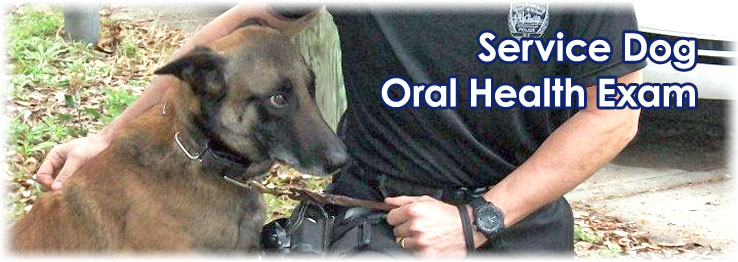
News: Register Today for National Service Dog Oral Health Exam

National Service Dog Oral Health Exam

The AVDC Service Dog Oral Health Exam program is a philanthropic event provided to the Service Dog public by board certified veterinary dentists of the American Veterinary Dental College. If your Service Dog qualifies, it would receive a complimentary oral health screening exam in August 2012 to help identify any problems that may affect the dog's oral comfort and health.
Our veterinary dentists understand the tremendous daily contribution Service Dogs make to the lives of individuals and to all of us as a society. In return, we want assist in these efforts, by assuring that the Service Dogs can have pain free and healthy mouths.

Event Goals

  1. To promote oral health awareness in Service Dogs by providing oral exams during August.
  2. To identify painful oral disease and provide treatment options to alleviate pain, and
  3. To benefit those who rely on Service Dogs by teaching preventative oral care in order to provide their dogs pain, free, healthy mouths.
  4. To enhance referral relationships with primary care veterinarians.
The mission of the AVDC Service Dog Oral Health Exam is to promote oral health awareness in service dogs in order to prevent and relieve pain, which will benefit, not only the service dog, but all the people they serve every day.

Eligibility

The AVDC Service Dog Oral Health program will provide free oral health screening to Service Dog groups including seeing eye dogs, hearing dogs, handicapped assistance dogs, detection dogs, search and rescue dogs and for certified therapy dogs (through the Delta Society or similar). Dogs must be active working dogs that are certified by an organization or are currently enrolled in a formal training program. The certifying agency must be regional or local. Essentially, the dogs need to have some form of certification and/or training paperwork from an agency to qualify for this program.
While we would like to offer complimentary oral exams to all dogs performing assistance to their owners/handlers, this program is limited to the groups listed above. There are limited appointments available to examine these animals therefore a specific group has been defined.

How will this work?

Owners/handlers of the dog will register the animal via an online registration form. Once registered, the owner/handler will be given a confirmation and list of participating dentists in their area. The owners/handlers call a participating office to schedule an appointment and provide the registration number to the clinic which will be given on the confirmation form. This process is included on the registration form.

Appointment Dates and Time

Appointment dates and times will vary based on the availability of exams offered by each clinic. The clinic sets the schedule for exams for certain set days, select times on specific days, or during times of their choice during the month of August. Identify yourself as participating in the AVDC Service Dog Oral Health Exam and provide the registration number given on your confirmation form. The appointment will be set by the clinic at that time. Some clinics may request that you present certification of the Service Dog's formal training. Be sure to ask if this is needed at the time of appointment scheduling.
Once the owner/handler has registered the Service Dog, they are asked to respect the dentist's time and show up for the appointment. Arriving on time is essential in allowing as many Service Dog's to receive exams as scheduled.

What should I expect during the appointment?

The complimentary oral health exam is of a screening nature. No sedation or anesthesia will be given. Factors that limit our ability to detect every dental or oral problem in your dog may include:
  1. Lack of patient cooperation can impair proper visualization, especially of the back of the mouth
  2. Many periodontal problems can be detected only by probing under the gum with a dental instrument with the dog under anesthesia,
  3. Dental tartar can hide underlying cavities or fractures.
If any problems are found at the time of the exam or if additional tests are needed (e.g. dental x-rays, periodontal exam under anesthesia, etc.), the dental specialist will present options to best treat your Service Dog.
A copy of the exam form will be given to you to give to your primary care veterinarian. Data collected on each dog will remain private and be utilized for research purposes only.

How do I participate?

Step 1: Registration.
If your Service Dog qualifies, register on-line. If you do not register, you cannot participate in the program.
» Register here
Step 2: Locating a clinic.
Once you have registered, the confirmation page will provide you with a link to a page that will provide a list of participating clinics. (Clinics may not be available in every state.)
» Find a participating dentist
Step 3: Scheduling
After locating the clinic you would like to visit, call the office directly, identify yourself as participating in the Service Dog Oral Health Exam program and make an appointment. Dates and times will vary from clinic to clinic throughout August. We suggest you register in early July to ensure a better chance of securing an appointment at your Service Dog. Slots are limited, and those that wait to register may find it difficult to find a clinic that has filled all appointments for this program. There are no "rain checks".
Step 4: Visit
Visit the dentist at the appointed time. Please call ahead if you will be late or have to cancel your appointment.
Step 5: After the Exam
After your Service Dog's oral exam is complete, your veterinary dentist will give you a copy of the examination form and information. Please take this back to your primary care veterinarian to complete your Service Dog's medical care to schedule any diagnostics or treatment that may be needed. Your primary care veterinarian is an important part of the team in providing your Service Dog with the best oral health care. The dental specialist will make a recommendation for treatment for your service dog instead of present options.
Most important: You MUST pre-register prior to calling to make your appointment with veterinary dental specialist.
 

Tuesday, March 6, 2012

News:Oregon Assistance Dogs Fundraiser Tonight!

Oregon Assistance Dogs is hosting a fundraiser to support their many teams in training at the Pappy's Pizza in Eugene all day today! Simply download this flyer and bring it with you when you visit Pappy's today and Oregon Assistance dogs will receive 50% of proceeds from your order!
Please note distributing the flyer on site is not permitted, so make sure to stuff a copy in your pocket or purse.

Friday, March 2, 2012

News: Puppies too frisky for ADA shelter - Lexology

A Burger King franchise was sued recently for violating the Americans with Disabilities Act (ADA) when an owner and his service dog-in-training were asked to leave the restaurant. A federal district court in California sided with Burger King and dismissed the case in the last few weeks. The court focused on whether the puppy, a 13-week-old Great Dane named Barack, was actually a service dog under the ADA. [ . . . Section Explaining what a service dog is under the law. . . ]
The restaurant asserted that Barack the Great Dane puppy was not fully trained as a service animal and only had basic obedience training. His owner, who was training the puppy to assist him with walking and balancing, countered that the puppy had a service dog tag from the county that was issued prior to the restaurant visit. The restaurant provided expert testimony that the puppy still had a “playful streak” and was too young to have complete control over its bladder and bowels for extended training periods.
However, the court focused on the fact that although the owner stated that the puppy was being trained to assist him with walking and balance, the puppy was not large enough at that point to assist with walking and balancing. According to the restaurant’s expert, the owner could have actually injured himself and the puppy if he had leaned on the puppy for balance. The court found that the puppy was not a service dog, because it had not been trained to perform tasks for the benefit of the individual with a disability, and the work or tasks performed by a service dog must be directly related to the individual’s disability. . . Although the Burger King case is an example that hospitality providers do not have to give unfettered access to customers with animals represented as service animals, they should exercise caution and common sense when encountering individuals with service animals. Read full Article Puppies too frisky for ADA shelter - Lexology

Tuesday, February 28, 2012

News: Hero Dog Nomination Open

Press Release:
HONOR YOUR HEROIC HOUND!
NOMINATIONS BEING ACCEPTED FOR 2012
“AMERICAN HUMANE ASSOCIATION HERO DOG AWARDS™”
----
Win a trip to Hollywood, honor your dog on national TV, and help win $15,000 for a worthy cause
GET THE WORD OUT BY SENDING THIS EMAIL TO ALL OF YOUR CONSTIUENTS, COLLEAGUES, MEMBERS AND OTHER DOG FOLKS ASAP!

WASHINGTON, D.C. – For thousands of years, dogs have protected us, comforted us, and given us their unconditional love.  Now you can repay the favor, win a trip to Hollywood, and help worthy charities share $50,000 in critically needed funds – just by clicking on www.herodogawards.org and nominating your capital canine in the 2012 “American Humane Association Hero Dog Awards™.”

Broadcast nationwide on Hallmark Channel, the American Humane Association Hero Dog Awards are produced by Emmy® award winning MRB Productions and seek to identify and recognize America’s Hero Dogs – often ordinary dogs who do extraordinary things, whether it’s saving lives, lending a comforting paw when you're sick, or just welcoming you home at the end of a hard day.

Dogs may be nominated in eight categories:   Law Enforcement & Arson Dogs;   Service Dogs;   Therapy Dogs;   Military Dogs;   Guide Dogs;   
Search and Rescue Dogs;   Hearing Dogs;   and Emerging Hero Dogs (the category for pets).

Finalists in each of the eight categories will be selected by the public from the pool of contestants, and flown to Hollywood with two of their human friends to the American Humane Association Hero Dog Awards™ gala at the Beverly Hilton Hotel in Los Angeles, California on October 6, 2012.  There they will walk the red carpet, attend the show which will be broadcast on the Hallmark Channel, and will be recognized in a video tribute at the black-tie gala where the winning American Hero Dog will be announced.  Each of the eight finalists will win $5,000 for their chosen charity selected from the contest’s list of 45 charity partners. The top winner will win an additional $10,000 for their charity partner.


Americans love a hero, and this year’s inaugural Hero Dog Awards proved that’s true for the four-legged kind as well. Everyone has a hero dog in his or her life, and we want to hear about yours!

“In a very short period of time, the Hero Dog Awards has established itself as the ultimate celebration of dogs and the remarkable things they do to make people’s lives better.  This annual initiative recognizes these tremendous animals through their stories of loyalty, bravery, commitment, and unconditional love,” says Bill Abbott, CEO and President, Crown Media Family Networks.  “As we open nominations for this year, we look forward to hearing and sharing more of these accounts, which are important reminders of how integral the human-dog partnership is to the enrichment of so many lives. I actively encourage dog lovers and everyone who has a four-legged hero to visit www.herodogawards.org and nominate your dog or share in the inspirational stories of others.”

Nominations close on March 26, 2012, and voting by the general public will begin on April 1, 2012.
Finalists in each category will be judged by a blue-ribbon panel consisting of both celebrities and animal experts, to determine the winning American Hero Dog. This year’s judges include Whoopi Goldberg, Candy Spelling, CBS’ Debbye Turner Bell, “America’s Veterinarian” Dr. Marty Becker, actresses Kristin Bauer Van Straten, Megyn Price, Edie McClurg, and Christie Brooke, Prince Lorenzo Borghese and many other notable names.

Complete rules and entry information can be obtained by visiting www.herodogawards.org.

About American Humane Association
Since 1877 American Humane Association has been at the forefront of virtually every major advance in protecting children, pets and farm animals from cruelty, abuse and neglect. Today we’re also leading the way in understanding the human-animal bond and its role in therapy, medicine and society. American Humane Association reaches millions of people every day through groundbreaking research, education, training and services that span a wide network of organizations, agencies and businesses. You can help make a difference, too. Visit American Humane Association at www.americanhumane.org today.

News: Justice Department settles Veterasn's ESA Discrimination Suit

Justice Department Settles Disability Discrimination Case Involving Disabled Veteran in Utah
WASHINGTON - The Justice Department today announced a $20,000 consent decree that resolves a lawsuit alleging that a Park City, Utah, condominium association and its management company violated the Fair Housing Act by refusing to grant a resident’s request for a reasonable accommodation.
The lawsuit, filed on Nov. 21, 2011, in U.S. District Court for the District of Utah, alleges that the Fox Point at Redstone Association, Property Management Systems and on-site property manager Derek Peterson refused to grant a reasonable accommodation so that Thomas Burton, a disabled combat veteran of the first Gulf War, could keep a small dog in the condominium he rented to help him cope with the effects of depression and anxiety disorder. The lawsuit further alleges that the defendants refused to waive their pet fees and insurance requirements and issued multiple fines that eventually led to the non-renewal of Burton’s lease. Read More

Friday, February 10, 2012

News:m American Bar Association Urges Policies to Accommodate Disabled Persons Using Service Animals

The American Bar Association adopted a resolution in support of policies being developed in support of the accommodation of people with disabilities who utilize services as a reasonable accommodation/ means of mitigating the affects of their disabilities.
RESOLVED, That the American Bar Association urges all federal, state, territorial, and local legislative bodies to repeal or amend all laws or policies inconsistent with the regulations implementing the Americans with Disabilities Act and to implement policies to ensure that persons with disabilities utilizing service animals are provided access to services, programs and activities of public entities and public accommodations in compliance with the regulations implementing the Americans with Disabilities Act in a manner that:
  1. Permits the use of a service animal for individuals with physical, sensory, psychiatric, intellectual, or other mental impairments;
  2. Provides an individualized determination of whether an animal meets the definition of service animal, recognizing that service animals do a wide range of work or tasks for individuals with disabilities;
  3. Provides for a size, weight and breed-neutral policy, utilizing a case-by-case analysis to determine whether a particular animal can be excluded from a public entity or public accommodation based on the particular’s animal’s actual behavior; and
  4. Encourages the enforcement by the United States Department of Justice and other governmental authorities with responsibility for implementing the Americans with Disabilities Act, in situations where individuals with disabilities utilizing service animals are denied access to services, programs and activities of public entities and public accommodations.
The supporting document for the resolution provides very clear and concise picture of the legalities supporting and defining service dogs as a concept in the United States complete with relevant case law and examples in just 4 pages of text. I highly recommend everyone have this in your files and personal knowledge bank!

Thursday, February 2, 2012

News: Guide Dogs to be given access to St. Peterburg Metro

ST. PETERBURG (SPT) — Visually impaired people will soon be able to enter city metro stations with guide dogs.
A decree on the issue was signed by Stanislav Popov, head of the city’s Transport Committee, but it has not yet been put into effect, Interfax reported last week.
According to the document, visually impaired people will be allowed to bring one guide dog into the metro free of charge. The dog will be required to be wearing a muzzle, a leash and a sign identifying it as a guide dog. The owner must also have a document confirming that the dog has completed a course on guiding its owner in the metro.

Thursday, January 5, 2012

News: St. Mercy Medical Center settles violation of Section 504 of the Rehabilitation Act

Following an investigation by the U.S. Department of Health and Human Services (HHS) Office for Civil Rights (OCR), St. Edward Mercy Medical Center (Mercy), in Fort Smith, Arkansas has agreed to make changes to its policies and procedures to comply with Section 504 of the Rehabilitation Act of 1973 (Section 504).
The settlement resulted from a complaint filed with OCR by a person with a lumbar and spinal disability who requires a service animal to assist him in a number of daily functions, including carrying and picking up items and helping to stabilize his walking. While the complainant sought emergency medical treatment for his father, Mercy refused to allow the service animal to accompany the complainant into the hospital. The complainant was told his service animal was not a “seeing eye dog” and the animal would need to be removed from the hospital because he could not show vaccination records or tags verifying the health of the animal. After an investigation, OCR found that Mercy’s policies and procedures regarding access to service animals inappropriately excluded service animals already being used by qualified individuals with disabilities other than vision impairment. Read More

Friday, December 2, 2011

News: Chongqing (China) lets guide dogs for blind in public

CHONGQING - Blind residents will be able to take their guide dogs on public transportation in Chongqing as the municipal legislature revised a draft regulation on the protection of the disabled on Friday.
The regulation will take effect on Jan 1.
When a third draft of the regulation was delivered for discussion at the meeting of the municipal people's congress standing committee on Wednesday, a stipulation that "blind people can take their guide dogs to public venues and public transportation", which appeared in the second draft, had been removed.
The reason given for the removal was that it conflicted with the local regulations on the management of rail traffic, which say: "No pets and other animals are allowed to be brought on the rail transport system and violators will be fined 20 yuan to 100 yuan ($3 to $15.4)".Read More

Monday, November 28, 2011

Need a service dog? Use a chair?

Hey readers,
This note is from the website of Summit Assistance Dogs, the program that trained and placed Shilo with me. Summit typically places dogs around the Northwest and requires several visits prior to placement with an average 2-3week team training. If you think you can meet these requirement an need a service dog because you are a wheelchair user, contact them.
Special note about service dogs for wheelchair users
Summit currently has very few applications for service dogs for clients who use wheelchairs and need assistance with tasks such as retrieving items, opening/closing doors, tugging clothing off, etc. We have several dogs in training who are going to be ideally suited for this type of placement. This means that the wait time to be matched with a dog may be much shorter than the usual 2-5 years. If you are a wheelchair user looking for a service dog, we encourage you to begin the application process by contacting kim@summitdogs.org.

News: Fair Housing Lawsuit Filed Against the University of Nebraska at Kearney for Discrimination Against Students with Psychological and Emotional Disabilities

WASHINGTON – The Justice Department today filed a lawsuit against the University of Nebraska at Kearney (UNK), the Board of Regents of the University of Nebraska and employees of UNK for violating the Fair Housing Act by discriminating against students with disabilities.
 
The lawsuit, filed in the U.S. District Court for Nebraska, charges that UNK and its employees engaged in a pattern or practice of violating the Fair Housing Act or denied rights protected by the act by denying reasonable accommodation requests by students with psychological or emotional disabilities seeking to live with emotional assistance animals in university housing. The suit also charges that UNK requires students with psychological disabilities to disclose sensitive medical and other information that is unnecessary to evaluate their accommodation requests.   This lawsuit arose as a result of a complaint filed with the Department of Housing and Urban Development (HUD) by a student enrolled at UNK who sought to live with an emotional assistance dog that had been prescribed.  Read More

Friday, November 25, 2011

News: Comments Needed on Service Animal Relief Areas in Airports

The Department of Transportation is seeking comment on service animal relief areas in airport by Nov. 28, 2011.
Service Animal Relief Areas

    The 2008 amendment to part 382 requires U.S. and foreign air 
carriers to work with airport operators to provide service animal 
relief areas at U.S. airports. Part 27 does not include a provision 
that mirrors this requirement. As such, the Department proposes to 
amend part 27 by inserting a provision that would require airport 
operators to work with carriers to establish relief areas for service 
animals that accompany passengers with disabilities departing, 
connecting, or arriving at U.S. airports.
    Part 382 does not provide specific directives regarding the design, 
number, or location of service animal relief areas an airport should 
have; it simply requires carriers to provide service animal relief 
areas in cooperation with the airports and in consultation with service 
animal training organizations concerning the design of service animal 
relief areas. However, in a Frequently Asked Questions document issued 
by the Department's Aviation Enforcement Office on May 13, 2009, 
examples of factors airlines and airports should consider in 
designating and constructing areas for service animal relief at U.S. 
airports are provided.\1\ Factors to consider in establishing relief 
areas include the size and surface material of the area, maintenance, 
and distance to relief area which could vary based on the size and 
configuration of the airport. The Department seeks comment about 
whether it should adopt requirements regarding the design of service 
animal relief areas and what, if any, provisions the rule should 
include concerning the dimensions, materials used, and maintenance for 
relief areas.Read More
 People can submit their comments online http://www.regulations.gov/#!documentDetail;D=DOT-OST-2011-0182-0001

Sunday, November 13, 2011

News: What Does the Evidence Show Us? The Role and Benefits of Autism Service Dogs

"Dr. Thomas Zane is a professor of education and director of the Applied Behavior Analysis Online Program at the Van Loan Graduate School of Endicott College. He is a licensed psychologist in New York and Massachusetts. Dr. Zane has published in various journals and books, presented at regional, national, and international conferences, and been an invited lecturer in Ireland and the Republic of China. His research interests include teacher training, staff development, and evidenced-based practice in autism. As part of his duties at Endicott College, he offers a BCBA certificate program through distance learning.
Animals have long been used to provide unique services for individuals who need specialized assistance in some way. For example, Seeing Eye dogs are trained to provide assistance to persons with visual impairments to negotiate the physical environment. In addition to providing such basic services as security and protection, animals have been used to provide emotional and psychological comfort and support to people (e.g., Hall & Malpus, 2000). In fact, it has been experimentally shown that social interactions can increase simply by being in the presence of a dog (McNicholas & Collis, 2000).
The increasing incidence of autism spectrum disorders has resulted in an increase in therapies designed to treat this condition. A recent development has been the training of dogs to specialize in working with persons with autism spectrum disorders. Proponents of “autism dogs” assert that these dogs can support the unique challenges of persons on the spectrum. This article reviews the current knowledge and research in this area." Read More

Tuesday, September 27, 2011

News: HUD Charges Washington Property Owner with Disability Discrimination

 WASHINGTON (Source: HUD) – The U.S. Department of Housing and Urban Development (HUD) today announced that it has charged the owner and manager of a Lakewood, Washington trailer park with discriminating on the basis of disability. HUD brings the charge on behalf of the Fair Housing Center of Washington, alleging that Deidra Miller, the owner of Terrace Trailers, and property manager Claudia Welch refused to make a reasonable accommodation to their “no pets” policy for testers posing as applicants with disabilities who needed service dogs.
Read More: HUD Charges Washington Property Owner with Disability Discrimination