Showing posts with label health. Show all posts

Friday, March 13, 2020

Service Dog Teams & Corona Virus

Hi my long Time Readers.
The majority of us partner with services dogs are considered at higher risk for contracting the Corona Virus/ COVID 19 by the Centers for Disease Control (CDC)
and as such we must practice self isolation and distance behaviors to protect ourselves. The American Veterinary Association page on COVID-19/ Corona Virus states " If you have a service animal or you must care for your pet, then wear a facemask; don’t share food, kiss, or hug them; and wash your hands before and after any contact with them." this also means that your service animal and you should practice some social distancing by enacting the following:
These easily accomplished if you have maintained kenneling, tie down and/ or go to place/mat behaviors. If you have not maintained these behaviors it is likely you will experience protesting behaviors in the possible forms of vocalizations, digging/scratching, trying to join you, pacing, restlessness; please stand your ground these will pass. You can also help you dog see the change in patterns as a good/fun thing by offering meals, chews or food puzzle toys in these spaces.
  • Not sleeping in the same bed.
  • Not allowing your dog on furniture with you.
  • Refraining from kissing your dog and/or allowing them to kiss you (hard one I know)
  • Wash your hands/sanitized your hands frequently. Especially before and after touching your dog.
  • Groom your dog after coming inside by wiping down with antiseptic/ antibacterial wipes.
Per a study in the Whole Dog Journal "
“This innovation of cleaning the dogs so they don’t become a vector for transmission is really important,” says Dr. Nyquist. “For humans, it’s washing your hands. This is a way of washing the dogs and making them as safe as possible in a very vulnerable population.”

Reviews/ Ratings Top 5 best antiseptic wipes for dogs
  • Practice Social distance with/ and for your service dog. If you must go out (and your service dog must go with you to accomplish that), do not allow others to touch/pet/kiss your service dog. Use this time to reinforce behaviors many teams let slide over time  such as: staying with in arms length of you when walking; not investigating things around with nose/tongues while waiting; resting under tables/chairs completely out of paths, settling and not fussing with you/ or you with them; not socializing with other animals while out; relieving on-leash in a designated area.
  • Clean your Dog's stuff:
  1. Bowl/ Treat pouches/ food toys Daily -with hot water and dish soap well rinse and dried or put in hot cycle in dish washer.
  2. Bedding -Weekly Hot water and completely dried before replacing. Don't forget to wipe down kennels/crates with a pet safe cleaner (if the dog has been ill or had and accident) or hot water and soap, well rinse and dried.
  3. Toys- these can go into the top shelf of the Dishwasher on sanitizer cycle
  4. Leashes/ Collars/Vests (Non-Leather) These can go through the Washer machine in a laundry bag or (again in the Dishwasher on the sanitize cycle)
  5. Brushes/ combs- clean out hair and put in dishwasher
If you are sick and quarantining, or social distancing  you can set up an indoor/ patio or balcony potty area for your service dog using a an artificial turf potty station, dog litter box, real grass or potty training pads- Here's a link to the top5 best rated ones. I personally used and recommend artificial grass system for service with catch trays as it has the ability to be cleaned easily, doesn't require buying a ton of supplies over and over, and keeps my dog ready for the indoor service animal rest areas when traveling.Teams who have maintained their dog's potty habits training including-
1.Potty on cue
2.Potty on leash

3.Potty where handler identifies (i.e. place and surface)
4.Potty when handler identifies/says
5. Pottying quickly = access to longer break or fun
Are likely to have an easier time with their dogs, and experience less stress over unusual bathroom routines. If you have not maintained these skills or never taught your dog to relieve on cue, on-leash and where you say, then you will need to treat this as you did housebreaking in the beginning. Be aware many adult dogs can and will hold it for a long time when you are trying to change relieving  habits keep to a schedule, offer extra opportunities, don't let them unsupervised if they have relieved, be patient, and reward heavily when they do, finally go where you need them too!

Friday, February 15, 2013

Whole Dog Journal discusses Canine Allergies

5 minutes to improve your understanding of allergies in dogs. Allergies are another common reason dogs are career changes from service dog work.

Wednesday, July 18, 2012

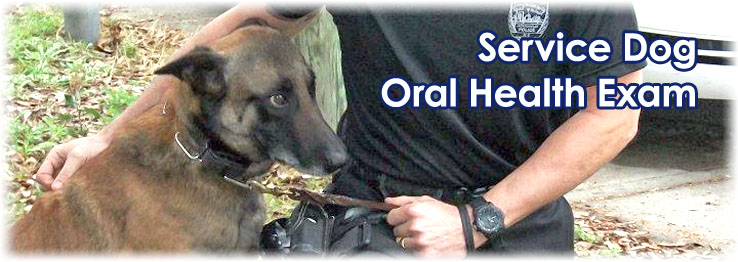
News: Register Today for National Service Dog Oral Health Exam

National Service Dog Oral Health Exam

The AVDC Service Dog Oral Health Exam program is a philanthropic event provided to the Service Dog public by board certified veterinary dentists of the American Veterinary Dental College. If your Service Dog qualifies, it would receive a complimentary oral health screening exam in August 2012 to help identify any problems that may affect the dog's oral comfort and health.
Our veterinary dentists understand the tremendous daily contribution Service Dogs make to the lives of individuals and to all of us as a society. In return, we want assist in these efforts, by assuring that the Service Dogs can have pain free and healthy mouths.

Event Goals

  1. To promote oral health awareness in Service Dogs by providing oral exams during August.
  2. To identify painful oral disease and provide treatment options to alleviate pain, and
  3. To benefit those who rely on Service Dogs by teaching preventative oral care in order to provide their dogs pain, free, healthy mouths.
  4. To enhance referral relationships with primary care veterinarians.
The mission of the AVDC Service Dog Oral Health Exam is to promote oral health awareness in service dogs in order to prevent and relieve pain, which will benefit, not only the service dog, but all the people they serve every day.

Eligibility

The AVDC Service Dog Oral Health program will provide free oral health screening to Service Dog groups including seeing eye dogs, hearing dogs, handicapped assistance dogs, detection dogs, search and rescue dogs and for certified therapy dogs (through the Delta Society or similar). Dogs must be active working dogs that are certified by an organization or are currently enrolled in a formal training program. The certifying agency must be regional or local. Essentially, the dogs need to have some form of certification and/or training paperwork from an agency to qualify for this program.
While we would like to offer complimentary oral exams to all dogs performing assistance to their owners/handlers, this program is limited to the groups listed above. There are limited appointments available to examine these animals therefore a specific group has been defined.

How will this work?

Owners/handlers of the dog will register the animal via an online registration form. Once registered, the owner/handler will be given a confirmation and list of participating dentists in their area. The owners/handlers call a participating office to schedule an appointment and provide the registration number to the clinic which will be given on the confirmation form. This process is included on the registration form.

Appointment Dates and Time

Appointment dates and times will vary based on the availability of exams offered by each clinic. The clinic sets the schedule for exams for certain set days, select times on specific days, or during times of their choice during the month of August. Identify yourself as participating in the AVDC Service Dog Oral Health Exam and provide the registration number given on your confirmation form. The appointment will be set by the clinic at that time. Some clinics may request that you present certification of the Service Dog's formal training. Be sure to ask if this is needed at the time of appointment scheduling.
Once the owner/handler has registered the Service Dog, they are asked to respect the dentist's time and show up for the appointment. Arriving on time is essential in allowing as many Service Dog's to receive exams as scheduled.

What should I expect during the appointment?

The complimentary oral health exam is of a screening nature. No sedation or anesthesia will be given. Factors that limit our ability to detect every dental or oral problem in your dog may include:
  1. Lack of patient cooperation can impair proper visualization, especially of the back of the mouth
  2. Many periodontal problems can be detected only by probing under the gum with a dental instrument with the dog under anesthesia,
  3. Dental tartar can hide underlying cavities or fractures.
If any problems are found at the time of the exam or if additional tests are needed (e.g. dental x-rays, periodontal exam under anesthesia, etc.), the dental specialist will present options to best treat your Service Dog.
A copy of the exam form will be given to you to give to your primary care veterinarian. Data collected on each dog will remain private and be utilized for research purposes only.

How do I participate?

Step 1: Registration.
If your Service Dog qualifies, register on-line. If you do not register, you cannot participate in the program.
» Register here
Step 2: Locating a clinic.
Once you have registered, the confirmation page will provide you with a link to a page that will provide a list of participating clinics. (Clinics may not be available in every state.)
» Find a participating dentist
Step 3: Scheduling
After locating the clinic you would like to visit, call the office directly, identify yourself as participating in the Service Dog Oral Health Exam program and make an appointment. Dates and times will vary from clinic to clinic throughout August. We suggest you register in early July to ensure a better chance of securing an appointment at your Service Dog. Slots are limited, and those that wait to register may find it difficult to find a clinic that has filled all appointments for this program. There are no "rain checks".
Step 4: Visit
Visit the dentist at the appointed time. Please call ahead if you will be late or have to cancel your appointment.
Step 5: After the Exam
After your Service Dog's oral exam is complete, your veterinary dentist will give you a copy of the examination form and information. Please take this back to your primary care veterinarian to complete your Service Dog's medical care to schedule any diagnostics or treatment that may be needed. Your primary care veterinarian is an important part of the team in providing your Service Dog with the best oral health care. The dental specialist will make a recommendation for treatment for your service dog instead of present options.
Most important: You MUST pre-register prior to calling to make your appointment with veterinary dental specialist.
 

Saturday, December 24, 2011

Pet Obesity: Health Implications, Recognition, and Weight Management | petMD

Service dogs like their human partners gain weight for a variety of reasons; however, because we spend so much with our canine partners and we love them to pieces we may not recognize when they have put on a few extra pounds.
Top Reasons Our Service Dogs Pack on the Pounds 
1. Simply being over fed. Remember, all treats and chews need to be counted in your service dog's over all calorie count.
2. Being under exercised. Many things affect how much exercise a dog gets and while a service dog may be out working everyday, if the brunt of their workday involves long down stays chances are pretty good your service isn't getting enough exercise.
3. People are feeding your service dog unauthorized treats or your dog lies in the lurch under the high chair.Hey, these things happen, but it might be time to refresh the rules about your service dog. Also you might want to keep your service dog out of the area or on leash when the children are eating!
4. You or your service dog are have recently recovered from an illness or injury that affect one or both of your abilities to exercise.
5.Aging. It is not uncommon for dogs as they age to have different nutritional needs that can affect their weight.
For more on Pet Obesity Read:Pet Obesity: Health Implications, Recognition, and Weight Management | petMD
Finally, as we approach the new year consider setting some health related resolutions for the health and happiness of your beloved service dog!

Wednesday, July 13, 2011

Tails of Seattle | Veterinary Q&A: A killer called 'bloat ' | Seattle Times Newspaper

I stumbled across this great article on bloat complete with video detailed diagrams and explanations. Many of the  common breeds for service dogs can be deep chested and as such prone to bloat. Knowing the signs couls save your partner's life!
Tails of Seattle | Veterinary Q&A: A killer called 'bloat ' | Seattle Times Newspaper

Friday, June 3, 2011

Healthy Dogs don't Stink

 Bad odor is just as important to pay attention to as any other symptom.

The number one rule when faced with a smelly dog is to look for and deal directly with the underlying problem, not to find a product that will mask the odor or to relegate your dog to the back yard. Dawg Business: It's Your Dog's Health!: Symptoms To Watch For In Your Dog: Bad Odor

Shilo at her worst smells like a dusty rug. Good Food, regular grooming, and regular vet visits are key in avoiding stinky dogs syndrome.

Thursday, May 19, 2011

News: FDA Recalls Pig Ears Dog Treats

Keys Manufacturing Company, Inc. Recalls Pig Ears for Pet Treats Because Of Possible Salmonella Health Risk


Contact:
Company
217-465-4001

Media Contact
Dan Curry
312-970-1016
FOR IMMEDIATE RELEASE - May 3, 2011 - Keys Manufacturing Company, Inc. of Paris, IL is recalling Pig Ears for Pet Treats because it has the potential to be contaminated with Salmonella. Salmonella can affect animals and there is risk to humans from handling contaminated pet products. People handling dry pet food and/or treats can become infected with Salmonella, especially if they have not thoroughly washed their hands after having contact with the chews or any surfaces exposed to these products.
Healthy people infected with Salmonella should monitor themselves for some or all of the following symptoms: nausea, vomiting, diarrhea or bloody diarrhea, abdominal cramping and fever. Rarely, Salmonella can result in more serious ailments, including arterial infections, endocarditis, arthritis, muscle pain, eye irritation, and urinary tract symptoms. Consumers exhibiting these signs after having contact with this product should contact their healthcare providers.
Pets with Salmonella infections may be lethargic and have diarrhea or bloody diarrhea, fever, and vomiting. Some pets will have only decreased appetite, fever and abdominal pain. Infected but otherwise healthy pets can be carriers and infect other animals or humans. If your pet has consumed the recalled product and has these symptoms, please contact your veterinarian.
Pig Ears for Pet Treats was distributed via truck to distributors in the following states: Pennsylvania, Virginia, Missouri, Iowa, Ohio, Illinois, Florida, Kentucky, Michigan, Arkansas, Indiana, Louisiana, Texas and Minnesota.
The product was distributed in 100 count cases packed in cardboard boxes shipped between Sept. 27-Oct. 6, 2010; Nov. 1-Nov. 29, 2010; and Jan. 3-Jan. 25, 2011.
One illness to a dog in Missouri has been reported to date.
The recall is a result of a reported illness by a dog in Missouri. Subsequently, the company has been working with the FDA to identify any products that might contain the bacteria and the company and the FDA is continuing the investigation to determine what caused the problem.
Consumers who have purchased Pig Ears for Pet Treats are urged to return it to the place of purchase for a full refund. Consumers with questions may contact the company at 1-217-465-4001.

Friday, April 22, 2011

Happy Earth Day!

Happy Earth Day everyone! I pulled the following except from the SDAWL archives.

Celebrating Earth Day: Earth Friendly Products for Service Dogs


I try to be as environmentally conscience as I can with the supplies and gear I use and buy for Shiloh, while keeping in mind my very real budget concerns. I recently had to switch from Organix, an organic (definition of organic from the USDA) dog food made locally in my home state to a natural (the USDA does not currently have a definition for "natural products" ) dog food because Organix--much as I and Shiloh love it-- just became too expensive for the budget.   AACFO that regulates the pet food industry defines "natural" as, "For the most part, "natural" can be construed as equivalent to a lack of artificial flavors, artificial colors, or artificial preservatives in the product.Read More

Thursday, April 21, 2011

News::Breed-Specific Causes of Death in Dogs Revealed in Landmark Study

ScienceDaily (Apr. 19, 2011) — Dog owners and veterinarians have long relied on a mix of limited data and anecdotal evidence to assess which breeds are at risk of dying from various conditions, but a new University of Georgia study provides a rare and comprehensive look at causes of death in more than 80 breeds. Read More from Science Daily article

Ready the study-Mortality in North American Dogs from 1984 to 2004: An Investigation into Age-, Size-, and Breed-Related Causes of Death

Wednesday, April 6, 2011

Social Networking to Save Money on Things Your Service Dog Needs

By now most of us are probably getting deals via email, text messaging, facebook, and iphone apps from our favorite vendors of all kinds of items and services we use regularly. I, recently, signed up for a couple free services called Living Social  and Groupon offering one day deals for all kinds of services in my area (and around the world) at up to 90% the regular price; and being a person who is on a very tight budget I love a deal (especially on things that often there would be no room for in said budget like meals out, movies, plays, etc). My deal hunting doesn't stop with stuff for me.... oh no sir, the dogs and stuff for them is fair game!

Online One Day Pet Supply Deals
Please note I found several other services; the above two are the only ones that checked out as active. Enjoy!All my readers, please share your best places for deals in the comments below this post!

Thursday, February 17, 2011

Book Review: Modern Dog Magazine-Food Allergies 101

Modern Dog Magazine has a great article this month of food allergies in dogs... what causes allergies, preventing allergies, spotting them, and what to do when your dogs is miserable with allergies. My first service dog Bastien was allergic to wheat, something I discovered through trial and error when he was young. Poor thing was itchy, developed hot spots with anything more than just small dog size treat with wheat in it. Read  Food Allergies 101

Friday, February 4, 2011

News:Heartworm preventive efficacy study results revealed at NAVC

One preventive found to be 100 percent effective against Dirofilaria immitis strain.

DVM NEWSMAGAZINE
Historically, heartworm disease has been effectively prevented in dogs by using available preventives. However, recent research indicates that some field isolates and laboratory strains of Dirofilaria immitis may not be fully susceptible to preventive medications.1-3 The number of heartworm positive dogs has increased in certain areas of the central United States, namely the Mississippi Valley and Delta regions, despite compliant use of preventives. And other variables, such as testing strategy changes and increased mosquito vectors, have been ruled out as potential explanations. The concern is that a subpopulation of heartworms in these areas has developed resistance to heartworm preventive medications. Read More

Monday, December 20, 2010

News: Kroger Pet Food Recall

(CNN) -- The Kroger Co. is recalling select pet food packages from stores in 19 states fearing some of these products may contain aflatoxin, a toxic chemical byproduct that could be harmful to animals.
The recall involves certain bags of Pet Pride Cat Food, Pet Pride Kitten Food, Old Yeller Chunk Dog Food, Kroger Value Cat Food and Kroger Value Chunk Food, the company said Saturday.Read More

Specific food and Sizes List

Recall States/Locations:Indiana (except SW IN, -Evansville-), Illinois, Eastern Missouri, Greater Cincinnati, including Northern Kentucky, Dayton, OH and South Eastern Indiana, Georgia, South Carolina, Alabama and Knoxville, Tennessee, Greater Memphis, TN, Arkansas, Mississippi and Western Kentucky, Michigan, Central and Northwest Ohio and N. West Virginia panhandle, Greater Louisville (including Indiana), Lexington, and Nashville, TN, North Carolina, Virginia, Eastern WV, Eastern Kentucky, SE Ohio, Texas and Louisiana; Dillons, Jay C, Food 4 Less, FoodsCo, Baker's, Gerbes, and Food4Less Fremont stores.

Sunday, December 19, 2010

Holiday Cautions- Tips to Keep Service Dogs and All Pets Safe During the Holidays

Protecting your Pet from Holiday Dangers

Remember, as the holidays approach, this is the most dangerous time of the year for our pets. The two greatest dangers are lost pets and pet poisoning.
Fall and Winter HolidaysWith the fall and winter holidays come many new faces, guests and dog sitters. Each time guests enter your home pets are exposed to new levels of stress, both positive and negative. Many pets are locked away from the guests while others are allowed to roam freely among the visitors. Doors, gates and garages are opened and closed at a feverish rate during the holidays. The opportunity for your pet to get out and explore is surely at paw! After the 4th of July, the winter holidays are the number one time of the year that pets are usually lost. Read the Complete List of Tips

Monday, August 30, 2010

Grooma-palooza: Our Trip to the dog wash.

Last Saturday, both Shiloh and Cammy needed a bath and since things are a little tight financially it was decided the self service dog wash, U Suds 'Em would be the best way to meet our needs for clean dogs with busting the bank. This a great in between full professional groom and DIY job at home. At the dog bath we have access to different soaps, brushes, blow dryers,special tubs and such we just don't have at home. Not too mention the fact that they take care of cleaning the mess and maintaining the equipment!
Shiloh, waits her turn on a tie down outside the tub area.
Leslie and Cammy go over the tools with the staff
Cammy gets Furminated before her bath. 

Cammy all soapy.
Shiloh's Turn!

Shiloh gets furminated!
Shiloh all soapy.

Tuesday, June 29, 2010

News: VetCentric and Guide Dogs for the Blind Team Up to Provide Discounted Prescriptions and Added Convenience to Program Graduates

VetCentric, the leader in vet-sponsored home delivery of FDA and EPA-approved medications for pets, has entered into an agreement with Guide Dogs for the Blind (GDB) to provide their graduates (guide dog users) with special discount pricing for their pet medications.

Glen Burnie, MD (Vocus/PRWEB ) June 29, 2010 -- VetCentric, the leader in vet-sponsored home delivery of FDA and EPA-approved medications for pets, has entered into an agreement with Guide Dogs for the Blind (GDB) to provide their graduates (guide dog users) with special discount pricing for their pet medications.
To take advantage of VetCentric’s special prescription discount plan, GDB graduates simply need to register online at guidedogs.com, print the custom form and bring it to their local veterinary clinic.Read More

Sunday, May 30, 2010

News: Human Foods Poisonous to Pets

From Yahoo: Here is a handy list of the top common foods that are toxic to your pet along with tips on what to do if your pet happens to get a hold of any of these substances.
The list:
  •  Avocado
  • Onions, onion powder, chives and garlic
  • Grapes and raisins
  • Yeast dough
  • Left-over bones
  • Foods with a high salt or fat content
  • Chocolate, coffee, alcohol
  • Sugarless candies (products sweetened with xylitol)
  • Macadamia nuts
Learn why these foods are dangerous          

Wednesday, April 21, 2010

Celebrating Earth Day: Earth Friendly Products for Service Dogs


From Shiloh, Summit Assistance Dog
I try to be as environmentally conscience as I can with the supplies and gear I use and buy for Shiloh, while keeping in mind my very real budget concerns. I recently had to switch from Organix, an organic (definition of organic from the USDA) dog food made locally in my home state to a natural (the USDA does not currently have a definition for "natural products" ) dog food because Organix--much as I and Shiloh love it-- just became too expensive for the budget.   AACFO that regulates the pet food industry defines "natural" as, "For the most part, "natural" can be construed as equivalent to a lack of artificial flavors, artificial colors, or artificial preservatives in the product. As mentioned above, artificial flavors are rarely employed anyway. Artificial colors are not really necessary, except to please the pet owner's eye. If used, they must be from approved sources, the same as for human foods. Especially for high-fat dry products, some form of preservative must be used to prevent rancidity. Natural-source preservatives, such as mixed tocopherols (a source of vitamin E), can be used in place of artificial preservatives. However, they may not be as effective" (taken from AACFO/FDA page on Pet Food Labeling). 

Food is just one area one can use to reduce the carbon foot print of a service dog. The pet product market is awash with biodegradable, sustainable, recyclable, and products made of reclaimed materials and according to The American Pet Products Association Survey of Pet owners in 2008/2009 the industry expects to see a continued demand for eco-friendly pet products of all kinds.

Examples of Eco-Friendly Products for the Busy Service Dog:
  • Biodegradable waste bags
  • Collars/Leashes/ Harnesses/ Beds made from recycled or sustainable materials such as recycled plastic, rubber, polyester; hemp; or bamboo to name a few.
  • Organic or Natural food  (I hear all you Barf and Raw Diet people yelling at me to include you:))  
 * Note: I haven't linked to any specific Eco-Friendly pet products or companies because there are just too many and I do not want to offend you, my loyal readers, by leaving out your favorite company. Free free to discuss you favorites by leaving a comment on this article.

Examples of Eco- Friendly Practices for Life with Service Dog
  • Bring Reusable traveling gear in your bag such as refillable water bottles, and reusable water bowl
  • Save and/ or Trade outgrown vests/harnesses/collars. I cannot tell you how much money my friends with service dogs and I have saved by trading/loaning gear that does fit or is not being used. Not to mention we don't throw away things we otherwise might this way.
  • Use biodegradable grooming products
  • Turn the water off while soaping up your service dog in the bath
  • Take your Service Dog in the Shower with you... Really, Seriously. I've done it and I know others who do this too.
  • Turn those warn out towels and blankets into dog towels/bedding
Do you have other eco-friendly practices and tips you use in life with your service dog? Share them in the comments section!

Resources and More Information on Topics in this article:
  1. FDA Pet Food Labels - General -Updated March 2010
  2. Appendix: USDA-NOP Organic Pet Food Task Force Initial Report April 7, 2006 DRAFT GUIDANCE DOCUMENT FOR DISCUSSION ONLY Examples of Labeling Terms Allowed for Pet Food Compliant with State Regulations and Proposed Organic Regulations 
  3. American Pet Products Association Survey of Pet owners in 2008/2009

Tuesday, March 30, 2010

Press Release:WORKING SERVICE DOGS GET FREE VETERINARY EYE EXAMS

Please note this event is for Service Dogs placed by programs only  because 
"Over the past several years we have had some individuals claim their dog was a Service Dog just to take advantage of the eye exam.  ACVO Diplomates generously donate their time and resources to provide eye exams for Service Dogs.  These resources are limited and if nonqualified dogs fill the limited time slots allotted then a qualified dog may be excluded. "
(Yet another example of how service dog fraud hurts legitimate owner -trained service dogs and their partners. Stepping off my soap box now.)

Press Release:
Certified working service dogs are being offered free screening eye examinations through Eye Care for Animals for the entire month of May. This is the third year this event has been held nationally by the American College of Veterinary Ophthalmologists ® in association with boarded veterinary ophthalmologists. 

Screening eye examinations can detect ocular diseases at an early stage when treatment can be most successful, thereby helping preserve the sight of these dogs whose partners depend upon them. Certified working service dogs include guide dogs, handicapped assistance dogs, detection dogs, and search and rescue dogs.

Qualified participants must register online at www.acvoeyeexam.org.  Click on Dog owners/participants at the top of the page and follow the onscreen instructions.  Once the registration number for the dog is assigned, the participant may call the participating Eye Care for Animals in their area to schedule an appointment for their dogs free eye exam during the month of May. Appointments are limited, so register and call today!

Eye Care for Animals has facilities in Arizona, California, Illinois, Kansas, Maryland, Nevada, New Mexico, Ohio, Texas, Utah, Virginia and Wisconsin, and is dedicated to providing the finest in veterinary ophthalmology services.  Their staff of board certified ophthalmologists provides the highest level of care, education, and understanding to their clients and their animal companions.  For more information visit www.eyecareforanimals.com.

ACVO® is a veterinary specialty organization of the American Board of Veterinary Specialties.  Its mission is to advance the quality of veterinary medicine through certification of veterinarians who demonstrate excellence as specialist in veterinary ophthalmology.  To become board certified a candidate must complete their Doctor of Veterinary Medicine program, a one year internship, a three year residency and pass a series of credentials and examinations.

Contact:
Julie Gamarano
jgamarano@eyecareforanimals.com
3260 N Hayden Road, Suite 214
Scottsdale, Arizona 85251
P: 480-682-6911